Navigating the UAE’s Minimum Tax Shift: What Businesses Must Know in Emerging Emirates – Vigor Accounting and Taxation

The UAE’s adoption of a global minimum tax framework is beginning to reshape how multinational businesses operate across smaller yet strategically important Emirates. Regions such as Fujairah, Umm Al Quwain, and Al Ain once primarily associated with cost-efficient setups and flexible licensing are now part of a broader international tax alignment. The introduction of DMTT 15 percent Fujairah, DMTT 15 percent Umm Al Quwain, and DMTT 15 percent Al Ain signals a move toward consistency, transparency, and compliance with global tax standards. At Vigor Accounting and Taxation, this transition is being addressed not as a challenge, but as a shift that requires structured financial planning and informed decision-making.
How DMTT Reshapes Tax Expectations in Fujairah
Fujairah has long been recognized for its accessibility to global shipping routes and cost-effective business environments, particularly within its free zones. However, the implementation of DMTT 15 percent Fujairah introduces a recalibration of tax expectations for multinational enterprises operating within the region.
Under this framework, businesses that previously benefited from low or zero tax environments may now be subject to a top-up tax if their effective tax rate falls below 15 percent. This means that DMTT 15 percent Fujairah is not just a compliance requirement but a structural shift in how profits are evaluated at a global level. Companies must now assess their group-wide financials rather than relying solely on local tax advantages.
From an advisory standpoint, Vigor Accounting and Taxation is seeing a growing need for effective tax rate analysis, ensuring that businesses in Fujairah are prepared for reporting obligations tied to DMTT 15 percent Fujairah while maintaining operational efficiency.
Understanding the Impact in Umm Al Quwain’s Business Environment
Umm Al Quwain has traditionally attracted investors looking for simplified licensing processes and lower operational costs. With the introduction of DMTT 15 percent Umm Al Quwain, the narrative is shifting toward compliance-driven business structuring.
For multinational groups operating in the region, DMTT 15 percent Umm Al Quwain ensures that any gap between the local effective tax rate and the global minimum is addressed through a top-up tax. This has particular implications for companies operating under free zone incentives, where previously low tax burdens may now require adjustment.
The presence of DMTT 15 percent Umm Al Quwain does not remove the Emirate’s value proposition but changes how businesses evaluate it. Operational advantages, such as logistics and cost structures, now carry more weight compared to tax savings alone. At Vigor Accounting and Taxation, businesses are guided through this shift by aligning accounting systems and ensuring that financial reporting supports compliance with DMTT 15 percent Umm Al Quwain regulations.

Al Ain’s Position Within the Minimum Tax Framework
Al Ain, operating within the broader economic structure of Abu Dhabi, is seeing increased attention from businesses seeking expansion opportunities. The introduction of DMTT 15 percent Al Ain aligns the region with the UAE’s commitment to global tax standards.
For companies operating in industrial and service sectors, DMTT 15 percent Al Ain requires a reassessment of financial models, particularly for those linked to multinational groups. Even where local incentives exist, the mechanism of DMTT 15 percent Al Ain ensures that overall tax liability meets the 15 percent threshold.
This shift is particularly relevant for cross-border operations and group-level reporting structures. Businesses must now account for how profits generated in Al Ain contribute to their consolidated tax position. Vigor Accounting and Taxation supports this transition by offering structured advisory services that incorporate DMTT 15 percent Al Ain into broader corporate tax strategies.
Compliance Requirements and Financial Structuring Under DMTT
The introduction of DMTT 15 percent Fujairah, DMTT 15 percent Umm Al Quwain, and DMTT 15 percent Al Ain extends beyond tax payments into detailed compliance obligations. Businesses are now required to maintain precise financial documentation, ensuring that their effective tax rates are accurately calculated and reported.
This includes adjustments to accounting systems, recalculations of taxable income, and alignment with international reporting standards. The presence of DMTT 15 percent Fujairah requires businesses to track financial data more rigorously, while DMTT 15 percent Umm Al Quwain introduces additional scrutiny for entities benefiting from free zone incentives. Similarly, DMTT 15 percent Al Ain reinforces the need for consistency in group-level reporting.
At Vigor Accounting and Taxation, the focus is on building systems that allow businesses to monitor these obligations in real time. This approach ensures that any liabilities arising from DMTT 15 percent Fujairah, DMTT 15 percent Umm Al Quwain, or DMTT 15 percent Al Ain are identified early and managed effectively.
Reassessing Business Strategy Beyond Tax Savings
One of the most significant outcomes of the DMTT framework is the shift in how businesses evaluate location advantages. While tax incentives once played a central role, the introduction of DMTT 15 percent Fujairah, DMTT 15 percent Umm Al Quwain, and DMTT 15 percent Al Ain places greater emphasis on operational efficiency, infrastructure, and market access.
For many businesses, this means revisiting expansion plans and restructuring operations to align with the new environment. The presence of DMTT 15 percent Fujairah encourages companies to focus on logistical advantages, while DMTT 15 percent Umm Al Quwain highlights the importance of cost management and scalability. In Al Ain, DMTT 15 percent Al Ain reinforces the value of integration within Abu Dhabi’s economic ecosystem.
Through strategic advisory, Vigor Accounting and Taxation helps businesses navigate this transition, ensuring that decisions are driven by long-term sustainability rather than short-term tax considerations.
Preparing for a Globally Aligned Tax Environment
The introduction of DMTT 15 percent Fujairah, DMTT 15 percent Umm Al Quwain, and DMTT 15 percent Al Ain marks a decisive step in the UAE’s evolution as a globally aligned financial hub. Businesses that adapt early will be better positioned to manage compliance requirements and maintain competitive advantage.
Preparation involves integrating tax considerations into every level of financial planning, from corporate structuring to reporting systems. The presence of DMTT 15 percent Fujairah requires continuous monitoring of effective tax rates, while DMTT 15 percent Umm Al Quwain demands alignment with international standards. At the same time, DMTT 15 percent Al Ain underscores the importance of group-level financial transparency.
With the guidance of Vigor Accounting and Taxation, businesses can approach this transition with clarity and structure. By focusing on compliance, strategic planning, and financial accuracy, companies can continue to operate confidently within the UAE’s evolving tax landscape.
Sources & definitions
Official sources
Terms used in this article
- Corporate TaxUAE Corporate Tax
- A 9% federal tax on business profits above AED 375,000, effective for financial years starting on or after 1 June 2023. Profits below that threshold are taxed at 0%.
- DMTTDomestic Minimum Top-up Tax
- A 15% minimum effective tax rate applied to large multinational groups operating in the UAE, aligning the country with the OECD's global minimum tax framework.
Reviewed by the Vigor Accounting & Taxation team on 2 May 2026. Guidance is general and does not replace advice on your own circumstances.
People also ask
- Why VAT Training Matters More Than Ever?Answered in: Build Tax Confidence Through Expert VAT Training Across the
- Why Businesses Are Investing in VAT Training UAE Programs?Answered in: Why VAT Training Has Become Essential for UAE Businesses
- Why Businesses Are Seeking FTA Reconsideration Fujairah Support?Answered in: Understanding the FTA Reconsideration Process in the UAE
- Why Businesses Are Seeking FTA Reconsideration Sharjah Support?Answered in: Why More UAE Businesses Are Challenging FTA Penalties
- Why Businesses Are Seeking FTA Reconsideration UAE Support?Answered in: What Businesses Should Know Before Filing an FTA
Worth reading
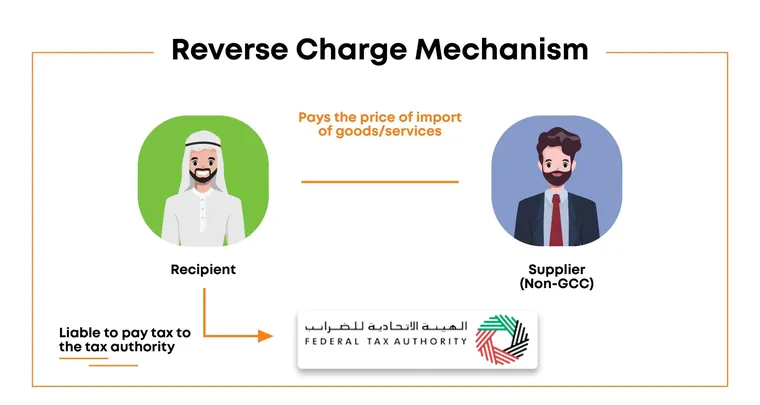 VAT & TaxWhat is Reverse Charge Mechanism (RCM) in UAE VAT: A Comprehensive GuideSmoothly filing your VAT returns like clockwork when suddenly your supplier mentions "reverse charge" that stops you from your tracks.Read the guide18 min read
More in VAT & Tax
See all → Al Ain · FujairahVAT & Tax5 min
Strengthen Your VAT Knowledge: Professional Training Programs
Understanding Value Added Tax (VAT) has become an essential part of running a successful business in the UAE. Ras Al Khaimah · SharjahVAT & Tax5 min
Build Tax Confidence Through Expert VAT Training Across the UAE
As the UAE continues to strengthen its tax framework, businesses and professionals are increasingly recognizing the importance of understanding Value Added… Abu Dhabi · DubaiVAT & Tax5 min