Internal Audit
International Financial Reporting Standards (IFRS)
Since 20179 Since 2017
- Adoption and transition
- Disclosure checked
- Auditor-ready
Talk to an auditor
Tell us what prompted the question and we will tell you what an audit would actually examine.
- Reply in 24h
- FTA approved
- Direct to a specialist
In one line
Whether the accounts are prepared the way IFRS requires, and what has to change if not.
Overview
What is IFRS?
International Financial Reporting Standards (IFRS) are the global method of accounting IFRS became a common language among finance professionalsIFAETwitter Published between. While many countries already include IFRS in their national standards, efforts continue to save yet more convergence. With the United States leaning towards IFRS and most likely to adopt it in future, a major transformation is expected..

- 5,000+
- Clients served
- 75+
- Professionals in Business Bay
- 9
- years, since 2017
This one is usually asked for after
01
A parent, an auditor or a lender requires IFRS-compliant statements
02
The company is moving from a local basis of preparation
03
A transaction needs treatment nobody in-house has applied before

Scope
In scope
IFRS Financial (In Report Segment)

Why it matters
Why IFRS matters
Submitting to the changing environment of both local and international financial reporting can be a difficult task for firms. At Vigor Accounting & Taxation, we oversee the myriad complexities that come with our role for you. Our Team provide many years of hands-on experience managing IFRS requirements.
How we can helpAt Vigor Accounting & Taxation, our IFRS specialists have specialized expertise and experience to assist in resolving difficult issues under the International Financial Reporting Standards. We pride ourselves on developing trust by providing clear, technology led solutions to solve the needs of our clients.
We have a team of best professionals, we are being served by Fellow Chartered Accountants (FCA), Cost & Management Accountant (CIMA) and Associate Certified Internal Auditors(ACIA), Associate Chartered Secretaries.
We employ from Professional colleagues like ACCA/ACA/CIA qualified accountants to IT specialist certifications including CISSP CRISC CGEIT Dell Boomi /Onesource certificate, big data specialists etc.. Privacy Officer Certification (specialists inclusion complexity matrix development.Islamic Finance Specialist, Anti-Money Laundering AML principles, Modern Slavery Reporting, Certified Trade Logistics experts.)
- A parent, an auditor or a lender requires IFRS-compliant statements
- The company is moving from a local basis of preparation
- A transaction needs treatment nobody in-house has applied before
How it runs
From terms of reference to follow-up
Phase 01
Scope and terms of reference
What is being examined, what it is being measured against, and who receives the findings. Agreed in writing before anything begins.
Phase 02
Walkthrough and testing
The process as documented, the process as performed, and the gap between them. Sampled where volume makes full testing pointless.
Phase 03
Findings and management response
Every finding rated and put to management before it is written up, so the report contains the answer as well as the problem.
Phase 04
Report and follow-up
A report the board can act on, with owners and dates against each action, and a follow-up to confirm what actually changed.


Phase 1 of 4
Scope and terms of reference
The deliverable
What lands on the table at the end
An internal audit does not end in an opinion on the accounts. It ends in findings, each one rated, each one already put to the manager who owns it, with a date against the response. That is what makes it a document a board can act on rather than a list of observations.
- Every finding rated, so the board knows what is urgent and what is routine
- Management's response recorded beside the finding, not filed separately
- An owner and a date against each action
- A follow-up that confirms what actually changed
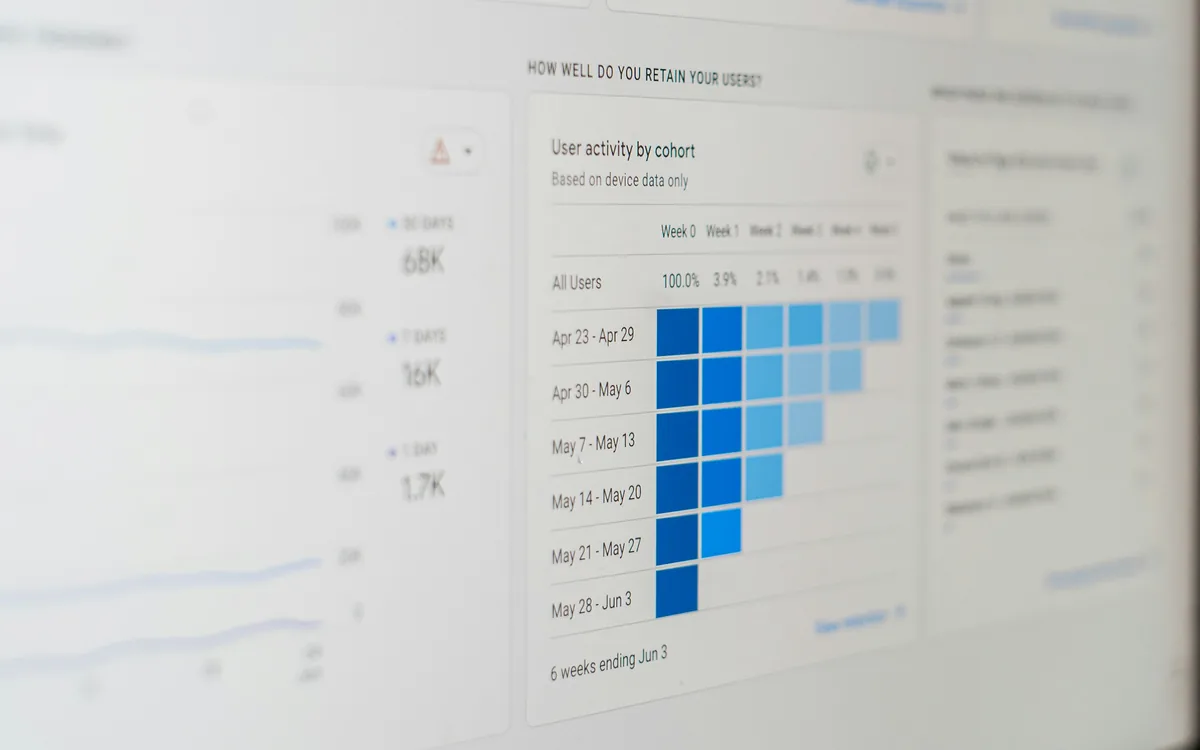
Drawn rather than photographed, and deliberately unreadable: the wording on your report is yours, and an accounting firm printing invented findings on its own website would be a liability.
Internal audit report
Findings and management response · International Financial Reporting Standards (IFRS)
Opinion
Basis for opinion
Vigor Accounting & Taxation LLC
Registered auditors, Business Bay, Dubai
Also in internal audit
Not sure this is the one you need?
Eleven audits is a lot to choose between from the outside. Three questions and we will point you at the right one.
Question 01 of 03
What has prompted you to look at this?
Select only one










Government Agencies
We work closely with all Government Agencies






Company formation, licensing, visas, customs codes and tax registration all pass through these authorities. Start a company setup.
Answers
Questions asked before an internal audit starts
The 6 asked most often about IFRS.
01Is IFRS compliance mandatory for UAE companies?
Most UAE companies, whether mainland or free zone, are expected to prepare financial statements in accordance with IFRS, particularly where audited accounts are required for licence renewal, banking, or tax purposes. Whether IFRS applies in full or in a simplified form to a given entity depends on its size, licence type, and the standards its regulator or free zone authority specifies.
02How much does IFRS advisory or implementation cost?
Cost depends on the size of the business, the number of transactions, and how far current records depart from IFRS requirements, so it is quoted after a review of the accounts. Bookkeeping support, which underpins accurate IFRS reporting, starts at AED 599 per month for up to 50 transactions.
03What happens if my financial statements are not IFRS compliant?
Auditors can qualify or reject financial statements prepared outside IFRS, which delays licence renewal, complicates bank facilities, and can affect corporate tax filings that rely on those figures. The consequence depends on the regulator involved and how material the departure from the standard is, rather than a single fixed penalty.
04How long does it take to bring accounts up to IFRS standard?
Timing depends on the state of existing records and the size of the business, typically ranging from a few weeks for straightforward accounts to longer where historical adjustments are needed. The process involves a gap analysis, correcting entries, and aligning the chart of accounts before financial statements are finalised.
05Do free zone companies still need to follow IFRS?
A free zone licence does not by itself remove the need for IFRS compliant accounts, since most free zone authorities require audited financial statements prepared under IFRS for licence renewal. Whether a particular free zone entity must comply, and in what detail, depends on its specific authority rules and licence category.
06What documents do you need to review IFRS compliance?
We typically need the trial balance, general ledger, prior year financial statements, fixed asset register, revenue contracts, and the chart of accounts, along with recent VAT and corporate tax filings. The exact list depends on the business activity and how the current accounting records are maintained.
Not here? Ask Vigor, and a specialist picks it up from there.