How to File a VAT Return in the UAE: VAT201 Steps, Deadlines and Penalties
Written by Nimrah Adnan · Reviewed by Aliasgar Khairullah, Chartered Accountant

 ApprovedTax agency
Vigor Accounting & Taxation is an FTA approved tax agency. The Federal Tax Authority explains what a registered tax agent may do on its Tax Agents page.
To file a VAT return in the UAE, you submit the VAT201 to the Federal Tax Authority (FTA) on EmaraTax for each tax period the FTA assigns, usually monthly or quarterly. The return and any net VAT are due within 28 days of the period end, and every registered business must file, even with no sales.
Key facts
- The VAT201 and any net VAT payable are due within 28 days of the end of each tax period, under the UAE VAT legislation published by the FTA.
- Registration creates the duty to file for every period, including periods with no sales (a nil return).
- The compulsory registration threshold is AED 375,000 of taxable supplies over 12 months; the voluntary threshold is AED 187,500.
- A late VAT return carries an AED 1,000 penalty for the first instance and AED 2,000 for each subsequent instance within 24 months.
- Net VAT payable is output tax on taxable sales minus recoverable input tax on business purchases.
- The standard UAE VAT rate is 5%.
- Since 14 April 2026, VAT paid late is charged at 14% a year, calculated monthly on the unpaid amount from the day after the due date.
This guide is prepared by Vigor Accounting & Taxation, an FTA approved tax agency in Business Bay, Dubai, with 8 years of practice since 2017. It explains who must file, when returns are due, how net VAT is calculated, the EmaraTax steps and the penalties for late or incorrect returns.
What is a VAT return in the UAE?
A VAT return in the UAE is the VAT201, a declaration covering a specific tax period in which a registered business reports its taxable supplies, recoverable input tax and net VAT. It is completed online on EmaraTax, the FTA's tax portal.
VAT has applied in the UAE since 2018. It is an indirect tax on the consumption of goods and services at every stage of production and delivery. A registered business collects VAT from customers and may recover the VAT it pays on business-related expenses. The VAT201 brings these two amounts together and settles the difference.
The return is a single on-screen form with separate boxes for each type of supply. Our VAT services cover the full cycle, from registration to filing.
Standard-rated, zero-rated and exempt supplies
The standard rate of 5% applies to most goods and services, while a few items are zero-rated or exempt. Each category is reported separately on the VAT201.
| Category | VAT charged | Input VAT on related costs |
|---|---|---|
| Standard-rated supplies | 5% | Recoverable |
| Zero-rated supplies | 0% | Recoverable |
| Exempt supplies | No VAT | Generally not recoverable |
In our experience advising clients, misclassification is one of the most common sources of error. A sale recorded as zero-rated when it should be standard-rated distorts the whole net VAT figure, not just one box.
Is VAT filing mandatory in the UAE, and who must file?
Yes. Every VAT-registered business, on the mainland or in a free zone, must file a VAT201 for each tax period until the FTA formally cancels its registration. The rule is the same in Dubai and every other emirate, and missed deadlines lead to FTA penalties.
The obligation attaches to the registration itself. After registration, a business is issued a Tax Registration Number (TRN) and is required to submit a filing for each period assigned to it, not just the ones in which it carries out trading.
- Compulsory registrants: a business must register once taxable supplies and imports exceed AED 375,000 over a 12-month period, and then file for every period.
- Voluntary registrants: voluntary registration is available to businesses above AED 187,500, and their filing duty is identical once they register.
- Nil-activity registrants: a quiet period still requires a return.
- End of the obligation: filing continues until deregistration is confirmed; ceasing to trade does not end it.
The thresholds are summarised on the UAE Government portal's VAT page. Our VAT registration service explains how the process begins.
Nil returns: filing when you made no sales
A nil return is still required and shows zero figures in the relevant boxes. A late nil return is treated as late filing, so a quiet quarter deserves the same attention as a busy one.
Who is exempted?
No registered business is exempt from filing, although some supplies are exempt from VAT itself. Those supplies are still reported in their own box.
Is VAT filing monthly or quarterly, and when is the UAE VAT return due?
VAT filing is either monthly or quarterly, depending on the tax period the FTA assigns, and the return is due within 28 days of the period end. The period reflects the size and nature of the business and appears on your registration in EmaraTax.
The 28-day rule for filing and payment
The same 28-day deadline applies to the VAT201 and to any VAT due, as set out in the VAT legislation on the FTA website. Monthly filers count from the end of each month, and quarterly filers from the end of each quarter.
For each period the portal shows the start date, end date and due date. Confirm the date there each time, and make sure you check it where the deadline falls near a weekend or public holiday.
| Situation | Registration threshold | Tax period and filing duty |
|---|---|---|
| Compulsory registrant | Taxable supplies above AED 375,000 | Period set by the FTA; return and net VAT due within 28 days of period end |
| Voluntary registrant | Above AED 187,500 | Same filing duty as any registered business |
| Nil activity in the period | Not applicable | Return still required for the period |
- Day 0Tax period ends
- Days 1 to 28Reconcile, file the VAT201 and pay any net VAT
- Day 28Return and payment due
- Day 29 onwardsAED 1,000 late-filing penalty; 14% a year on unpaid VAT
Record each due date in your compliance calendar as soon as the FTA confirms your tax period.
How is net VAT calculated on the VAT201?
Net VAT equals the output tax charged on taxable sales minus the input tax you can recover on business purchases. A positive result is paid to the FTA, while a negative result may be carried forward or claimed through our VAT refund claims service.

Understanding the VAT 201 form
The VAT201 has fourteen boxes in two halves: what you sold (output tax) and what you bought (input tax). Amounts are stated in AED, and EmaraTax calculates the totals in Boxes 8, 11 and 14 from your entries. Reverse charge purchases appear on both sides.
| Box | What it records |
|---|---|
| 1a to 1g | Standard-rated supplies, split by the emirate where each supply was made |
| 2 | Tax refunds paid to tourists under the Tax Refunds for Tourists Scheme |
| 3 | Supplies subject to the reverse charge (output side) |
| 4 | Zero-rated supplies |
| 5 | Exempt supplies |
| 6 | Goods imported into the UAE |
| 7 | Adjustments to goods imported into the UAE |
| 8 | Total output: value and VAT |
| 9 | Standard-rated expenses (recoverable input tax) |
| 10 | Supplies subject to the reverse charge (input side) |
| 11 | Total input: value and VAT |
| 12 | Total tax due for the period |
| 13 | Total recoverable tax for the period |
| 14 | Net VAT payable or refundable |
EmaraTax shows the live form for your period, so match each figure to the box label on screen as you enter it.
Output tax and input tax
Output tax is the VAT you collect from customers on taxable supplies. Input tax is the VAT you pay on business expenses and are permitted to recover.
Why the tax invoice matters
A valid tax invoice supports both the output tax you report and the input tax you recover. An input tax claim that cannot be matched to an invoice is difficult to defend if the FTA raises a question.
Worked example (illustrative only)
The sales and purchase figures below are hypothetical. The bookkeeping cost uses our published package of up to 150 transactions a month at AED 799 per month, treated here as exclusive of VAT for illustration.
| Item (one quarter) | Amount (AED) |
|---|---|
| Standard-rated sales | 400,000 |
| Output tax at 5% | 20,000 |
| Standard-rated purchases | 240,000 |
| Input tax on purchases at 5% | 12,000 |
| Bookkeeping fee (3 × 799) | 2,397 |
| Input tax on bookkeeping at 5% | 119.85 |
| Total input tax (12,000 + 119.85) | 12,119.85 |
| Net VAT payable (20,000 − 12,119.85) | 7,880.15 |
A smaller business on the package of up to 50 transactions a month, at AED 699 per month, would follow the same method. The point is that professional fees for taxable activity also carry recoverable input tax when supported by a valid invoice.
How do you file a VAT return on EmaraTax?
You file by logging in to EmaraTax, completing the VAT201 for the open tax period and paying any net VAT within 28 days of the period end. Use the official portal, EmaraTax, typed directly rather than reached through a search result or an emailed link.
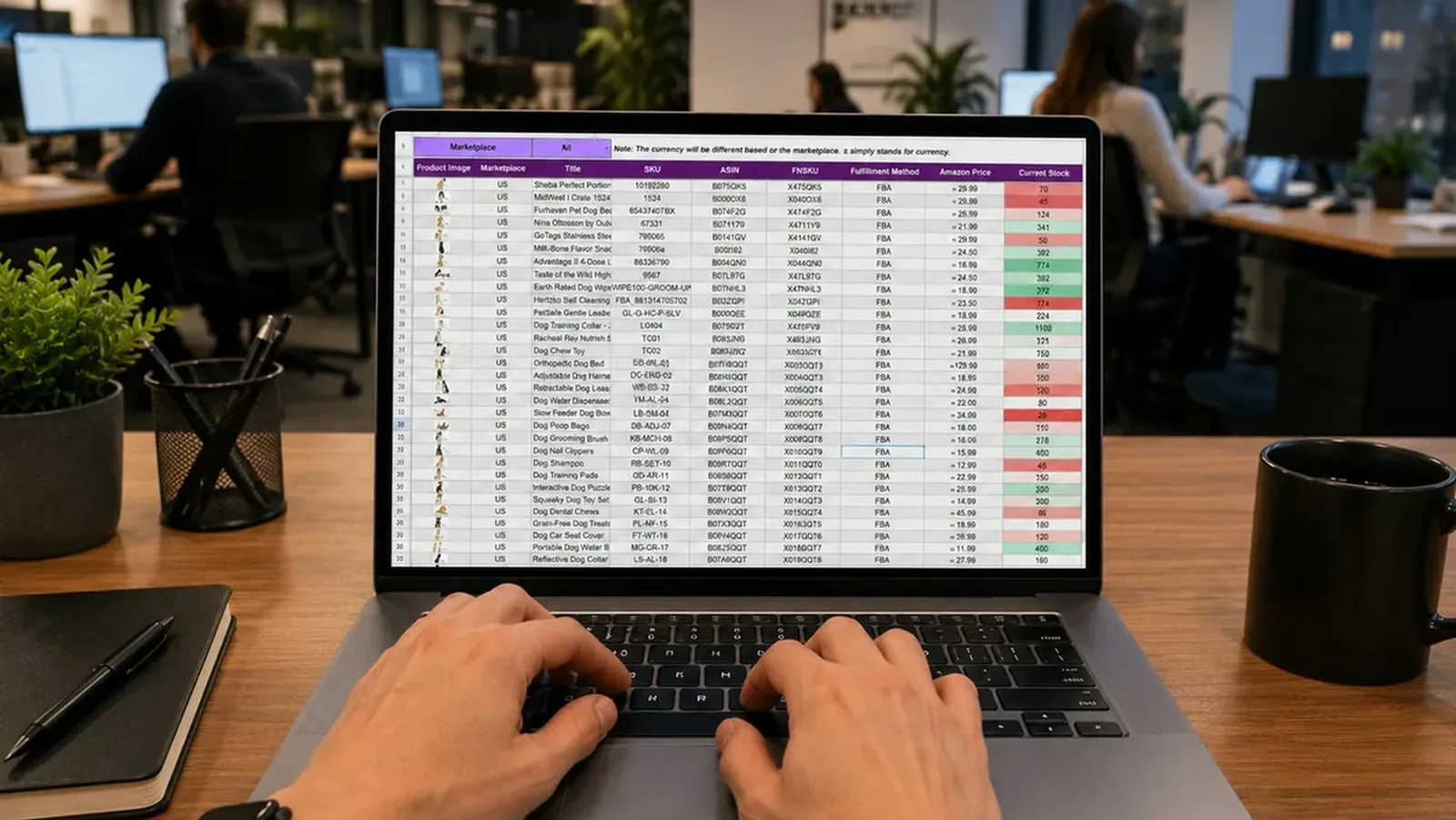
- Gather the period's data. Collect sales and purchase records, tax invoices and credit notes, and reconcile them to your ledger.
- Log in to EmaraTax. Use your registered credentials or UAE Pass, then select the taxable person account linked to the registration.
- Open the VAT201. Choose the return that matches your assigned monthly or quarterly period.
- Complete each box. Report each category of supply separately, with recoverable input tax and any reverse charge items.
- Review and submit. Check the net VAT against your records, because corrections follow a separate process.
- Pay any net VAT. Payment falls within the same 28-day window.
Logging in and common access problems
Most access problems arise because the login does not match the account linked to the registration. Check that UAE Pass is linked to the business account, that the user holds the right authorisation, and that the registered email and mobile number are current.
Submitting and paying
Submission and payment are separate actions, and both must be completed by the deadline. A return filed on time does not by itself settle the VAT due. Keep the acknowledgement and payment confirmation with the period's records.
Amending a VAT return after submission
If you find an error after submitting, do not file a second return for the same period. Errors are corrected by voluntary disclosure on EmaraTax (form VAT211). Where the error changes the tax due, a charge of 1% a month runs on the difference from the day after the original return was due until the disclosure is filed, so correcting early costs less. An incorrect return also carries an AED 500 penalty, waived if you correct it before the filing deadline. To dispute an FTA decision instead, see the FTA reconsideration process.
If you would prefer a tax agent to prepare each return, see our VAT return filing service.
What should you check before you file your VAT201?
Before you file, confirm that your records are complete, your ledgers are reconciled and your EmaraTax access works. These checks are best done early rather than on the final day of the window.
Documents to have ready
Keep the period's tax invoices, credit notes, customs declarations for imports and exports, and bank statements to hand. Records scattered across spreadsheets are the usual cause of last-minute delays. Keep these records for at least five years after the end of the tax period they relate to: not keeping the required records carries a penalty of AED 10,000, or AED 20,000 if repeated within 24 months.
Checklist: before you file your VAT201
- Confirm the tax period and due date in EmaraTax.
- Test your login, including UAE Pass where used.
- Export the full sales ledger, including credit notes.
- Match each input tax claim to a valid tax invoice.
- Separate standard-rated, zero-rated and exempt supplies.
- Record reverse charge items in both output and input VAT.
- Reconcile bank, receivables and payables to the VAT figures.
- Prepare a nil return if there were no sales.
- Arrange funds so payment meets the same deadline.
Common mistakes to avoid
Common errors include late filing or payment, assuming no sales means no return, and claiming input tax without a valid invoice. Our accounting and bookkeeping support keeps records ready, and our VAT training helps in-house teams understand each box.
What are the penalties for late or incorrect VAT filing?
A late VAT return costs AED 1,000, or AED 2,000 if it happens again within 24 months, and VAT paid late is charged at 14% a year, calculated monthly on the unpaid amount from the day after the due date. These are the amounts in force since 14 April 2026, under Cabinet Decision No. 40 of 2017 as amended by Cabinet Decision No. 129 of 2025; figures published before that date are out of date.
| What went wrong | Penalty since 14 April 2026 |
|---|---|
| VAT return filed late | AED 1,000; AED 2,000 if repeated within 24 months |
| VAT paid late | 14% a year, charged monthly on the unpaid amount |
| Incorrect return | AED 500, waived if corrected before the filing deadline |
| Error corrected by voluntary disclosure | 1% a month on the tax difference |
| Error found after the FTA announces an audit | 15% of the tax difference plus 1% a month |
| Required records not kept | AED 10,000; AED 20,000 if repeated within 24 months |
Filing and payment are separate exposures: a return filed on time still attracts the 14% charge if the VAT is not paid by the same date. Every UAE tax fine, each with its source decision, is set out in our UAE tax penalties guide.
If you believe a penalty was issued wrongly, our VAT assessment and appeals services explain how such matters are reviewed.
How do you claim a VAT refund in the UAE?
When your recoverable input tax is higher than your output tax, Box 14 shows a refundable amount and the excess becomes a credit on your EmaraTax account. You can keep it against future returns or apply for a refund on EmaraTax (form VAT311), and the FTA reviews your records before paying. Exporters and businesses with large one-off purchases are the ones most often in this position, and the tax invoices behind every input tax claim are what the review checks. Our VAT refund claims service prepares the application.
What should you do now?
If your business is VAT-registered, these steps keep each return on time and accurate.
- Confirm your tax period and next due date in EmaraTax.
- Check that your login opens the right taxable person account.
- Reconcile ledgers to tax invoices before the period closes.
- File a nil return for any period without sales.
- Submit the VAT201 and pay any net VAT within 28 days.
- Seek advice before amending a return or challenging a penalty.
What does FTA approval permit us to do?
FTA approval means we act as an approved tax agency, preparing your VAT201 and handling the filing with you. Vigor Accounting & Taxation has 75+ professionals and an approved auditor in every major UAE free zone.
- Direct access to a specialist: you speak to the people who prepare your return.
- Fixed fees, quoted up front: scope and fee are confirmed in writing before work begins.
Approval does not change your own duty to file accurately and on time. For wider questions, see our VAT consultancy services.
Talk to a tax agent about your VAT filing
VAT runs as one lifecycle: register once you pass the threshold, keep accurate records, file each VAT201 and deregister formally when the obligation ends. Corporate tax is filed separately, yet both draw on the same financial records.
To confirm what your business must file, and for which period, call or WhatsApp us on +971 56 406 6500.
This article is for general information only and is not financial, tax or investment advice. Please speak to a registered adviser about your own situation.
References
- Federal Tax Authority: VAT legislation (Federal Decree-Law No. 8 of 2017 and its Executive Regulation)
- Cabinet Decision No. 40 of 2017, as amended by Cabinet Decision No. 129 of 2025 (penalties in force from 14 April 2026)
- Federal Tax Authority: Value Added Tax
- UAE Government portal: Value Added Tax
- EmaraTax portal
Frequently asked questions
01What is my VAT return called in the UAE?
It is called the VAT201. It is submitted on EmaraTax for each tax period and reports output tax on sales and input tax on purchases.
02Who is exempt from VAT in the UAE?
A business with taxable supplies below AED 375,000 a year does not have to register (AED 187,500 is the voluntary threshold). Some supplies are exempt, such as certain financial services, residential property after its first supply, bare land and local passenger transport. A registered business still files every return and reports exempt supplies in Box 5.
03Do I need to file a VAT return if my business made no sales?
Yes. A registered business must file a nil return for every period, even where it was not taxable, and a late nil return counts as late filing.
04What is the penalty for paying VAT late in the UAE?
Since 14 April 2026, VAT paid late is charged at 14% a year, calculated monthly on the unpaid amount from the day after the due date. It applies even when the return itself was filed on time.
05Can I get a VAT refund if my input VAT is higher than my output VAT?
In principle, yes. The excess may be carried forward or claimed as a refund, subject to the FTA's review of your records.
06How much does VAT return filing cost in the UAE?
The filing fee depends on scope and is quoted as a fixed fee in writing. Our accounting and bookkeeping packages start at AED 399 per month for up to 10 transactions a month, and government fees are charged at cost.
Sources & definitions
Official sources
Terms used in this article
- VATValue Added Tax
- A 5% consumption tax applied to most goods and services in the UAE. Businesses above the mandatory threshold must register with the Federal Tax Authority and file returns.
- Corporate TaxUAE Corporate Tax
- A 9% federal tax on business profits above AED 375,000, effective for financial years starting on or after 1 June 2023. Profits below that threshold are taxed at 0%.
- TRNTax Registration Number
- The unique 15-digit number the Federal Tax Authority issues on registration. It must appear on every tax invoice and is how the FTA identifies your business.
- FTAFederal Tax Authority
- The UAE government body responsible for administering, collecting and enforcing federal taxes, including VAT, excise and corporate tax.
Reviewed by the Vigor Accounting & Taxation team on 25 November 2026. Guidance is general and does not replace advice on your own circumstances.
People also ask
- Why VAT Training Matters More Than Ever?Answered in: Expert VAT Training Across the UAE
- Why Businesses Are Investing in VAT Training UAE Programs?Answered in: Why VAT Training Is Now Essential in the UAE
- Why Businesses Are Seeking FTA Reconsideration Fujairah Support?Answered in: The FTA Reconsideration Process in the UAE
- Why Businesses Are Seeking FTA Reconsideration Sharjah Support?Answered in: Challenging FTA Penalties in the UAE
- Why Businesses Are Seeking FTA Reconsideration UAE Support?Answered in: What Businesses Should Know Before Filing an FTA
Worth reading
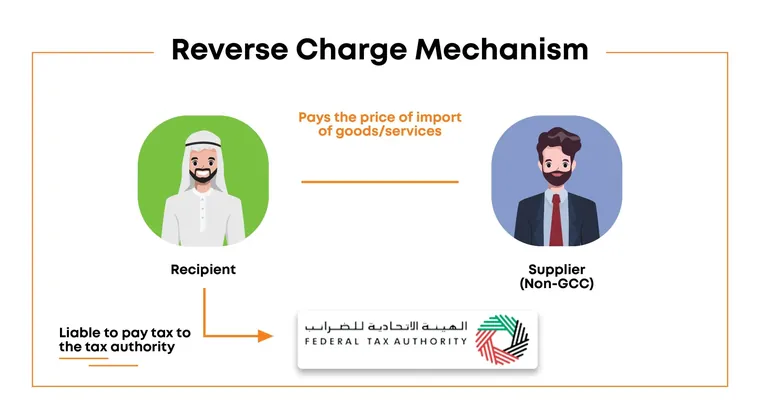 VAT & TaxWhat is Reverse Charge Mechanism (RCM) in UAE VAT: A Comprehensive GuideSmoothly filing your VAT returns like clockwork when suddenly your supplier mentions "reverse charge" that stops you from your tracks.Read the guide18 min read
More in VAT & Tax
See all → Al Ain · FujairahVAT & Tax5 min
Strengthen Your VAT Knowledge: Professional Training Programs
Understanding Value Added Tax (VAT) has become an essential part of running a successful business in the UAE. Ras Al Khaimah · SharjahVAT & Tax5 min
Build Tax Confidence Through Expert VAT Training Across the UAE
As the UAE continues to strengthen its tax framework, businesses and professionals are increasingly recognizing the importance of understanding Value Added… Abu Dhabi · DubaiVAT & Tax5 min